

Take ownership of your life, and something begins to change almost immediately. Your circumstances may not suddenly improve, your problems may not disappear, and you may not have all the answers, but the way you approach what happens next becomes completely different.
I want you to think back to a moment in your life that you didn’t choose.
Maybe you lost your job.
Maybe a relationship suddenly ended.
Maybe someone you trusted disappointed you.
Maybe an opportunity disappeared.
Maybe a plan you’d been counting on completely fell apart.
We’ve all had moments like that.
Moments we didn’t ask for and certainly wouldn’t have chosen.
Now think about something else.
What did you do next?
Because I’ve come to believe that what happens next can sometimes be far more important than what happened to you.
Life is unpredictable. It doesn’t ask our permission before changing our plans, and despite our best efforts, we’ll never be able to control everything that happens.
But there is something we can control.
We can decide what we do with what we’ve been handed.
I call that mindset ownership over circumstance.
What Does It Mean to Take Ownership of Your Life?
Taking ownership of your life means accepting that while you can’t always control your circumstances, you can take responsibility for how you respond to them and what you choose to do next.
That’s an important distinction.
Ownership does not mean believing everything that happens to you is your fault.
It isn’t.
Someone may treat you unfairly.
Someone may leave.
You may lose your job through absolutely no fault of your own.
A business can fail despite your best efforts.
An unexpected event can completely change your plans.
Taking ownership isn’t saying:
“This happened because of me.”
It’s saying:
“This happened. This is my life. Now I’m going to decide what I do next.”
Those are two completely different things.
One is blame.
The other is ownership.
And understanding the difference can completely change the way you approach difficult circumstances.
The Question That Changed My Own Life
I learned this lesson during one of the most difficult periods of my life.
At 38 years old, my life looked nothing like I had imagined.
I was deeply in debt.
I’d lost my job.
My wife was pregnant.
And I remember looking at the situation and wondering how in the world I was going to get myself out of it.
There were plenty of circumstances I hadn’t chosen.
There were things I could blame.
There were things I wished had happened differently.
And I could have spent a very long time asking:
“Why did this happen to me?”
But eventually, that question had to change.
Instead, I began asking:
“Okay. This happened. What am I going to do now?”
It sounds like a small difference.
It wasn’t.
“Why did this happen?” kept me looking backward.
“What am I going to do now?” forced me to look forward.
I couldn’t change what had already happened.
But I could begin changing what happened next.
And that’s where taking ownership of your life becomes so powerful.
Stop Waiting for Your Circumstances to Change
I think many of us unknowingly make a deal with life.
We tell ourselves:
“When things get better, I’ll start moving forward.”
“When I feel more confident, I’ll try.”
“When another opportunity comes along, I’ll be ready.”
“When life calms down, I’ll figure everything out.”
And sometimes circumstances do improve.
But what happens if they don’t?
How long are you willing to put your future on hold while you wait?
At some point, a better question is:
“Instead of waiting for life to get easier, how can I get better at handling life?”
That’s ownership over circumstance.
You stop requiring the world around you to change before you allow yourself to move forward.
You start looking for the things that still belong to you.
Your decisions.
Your actions.
Your attitude.
What you learn.
Who you ask for help.
Whether you try again.
What you do today.
You may have less control over your circumstances than you’d like.
But you probably have far more control over your next move than you realize.
Replace “Why Me?” With “What Now?”
There are times when asking why is useful.
Understanding what went wrong can teach us something. Looking backward can help us avoid repeating mistakes.
But eventually, why reaches the end of its usefulness.
You have to move toward:
What now?
Imagine you’ve just lost your job.
You can’t change the decision that’s already been made.
But you can update your resume.
You can call someone in your network.
You can learn a new skill.
You can apply for another position.
You can reconsider what you actually want to do next.
Or imagine a relationship ends unexpectedly.
You can’t force another person to come back.
But you can decide how you’re going to take care of yourself.
You can learn from the relationship.
You can reconnect with people.
You can begin rebuilding.
You can eventually open yourself to whatever comes next.
The circumstances are different, but the principle is the same.
You don’t have to control what happened to take ownership of what happens next.
A Simple Three-Question Formula
So how do you actually apply this mindset when life catches you off guard?
I’ve found that it helps to make it very simple.
When something happens that you didn’t choose, eventually ask yourself three questions.
1. What Happened?
Start with reality.
Not what you wish happened.
Not what should have happened.
Not what would have happened if somebody else had done something differently.
What actually happened?
This doesn’t mean you have to like it.
Acceptance is not approval.
It simply means acknowledging the reality you’re dealing with.
You cannot make a good decision about where to go next if you’re still arguing with where you are.
2. What Can I Control?
Now separate what belongs to you from what doesn’t.
You can’t control another person’s decisions.
You can’t control yesterday.
You can’t control every economic condition, every unexpected event, or everything people think about you.
So don’t spend all of your energy trying to control things that aren’t yours to control.
Instead ask:
What can I do?
Maybe it’s a phone call.
Maybe it’s a conversation.
Maybe it’s changing your approach.
Maybe it’s learning something.
Maybe it’s asking for help.
Maybe it’s simply giving yourself a little time before deciding anything.
Find the part of the situation you can influence.
That’s where your energy belongs.
3. What Am I Going to Do Next?
This is the question that turns ownership into action.
And notice I’m not asking:
“How am I going to fix my entire life?”
I’m asking:
What’s next?
One phone call.
One application.
One conversation.
One decision.
One hour spent learning.
One attempt.
One step forward.
You don’t need to see the entire staircase to take the next step.
And once you take that step, you may see something you couldn’t see from where you were standing before.
Your Direction Can Change Before Your Circumstances Do
This is one of the most important things to understand about changing your mindset.
People sometimes hear phrases like “change your mindset and change your life” and assume that means thinking differently will somehow make their problems disappear.
That’s not what I’m saying.
If you’re $100,000 in debt this morning, changing your mindset doesn’t make the debt disappear this afternoon.
If you’ve just lost your job, a positive attitude doesn’t magically give it back.
If a relationship ended, thinking differently doesn’t undo what happened.
Your circumstances may not change immediately. But your direction can.
That’s what happened to me.
The moment I decided to take ownership of where my life went next, my financial problems didn’t disappear.
My circumstances didn’t magically change.
I did.
And because I began changing what I was doing, eventually my circumstances began changing too.
That’s why mindset matters.
A mindset doesn’t change your life simply because of what you think. It changes your life because your thinking changes what you do next.
And actions, repeated over time, can change almost everything.
You Don’t Have to Have All the Answers
Ownership can sound intimidating if we misunderstand it.
“So now I have to figure everything out myself?”
No.
Taking ownership can include asking for help.
It can include admitting you don’t know what to do.
It can include changing your mind.
It can include talking to someone who knows more than you.
It can include resting before you decide.
It can even include admitting that the path you’ve been following isn’t working anymore.
Ownership doesn’t mean having every answer.
It means refusing to surrender responsibility for finding your next one.
Sometimes your next step is incredibly small.
That’s fine.
A small step in the right direction is still movement.
Sometimes Life Writes a Page for You
I like to think of life as a story we’re constantly writing.
We make decisions.
We set goals.
We create plans.
We imagine how the next few chapters will unfold.
But every once in a while…
Life grabs the pen.
A job disappears.
A relationship ends.
Someone disappoints us.
An opportunity falls apart.
Something happens that changes the story without asking our permission.
You didn’t write that page.
Maybe you hate that page.
Maybe you wish you could tear it out completely.
But you can’t.
What you can do is turn the page.
And when you do, the pen is back in your hand.
That’s ownership over circumstance.
You don’t have to pretend the previous chapter didn’t happen.
In fact, you can learn from it.
You can grow from it.
You can carry its lessons with you.
But you don’t have to allow it to write the rest of your story.
Take Ownership of What Happens Next
There will always be parts of life outside your control.
That’s not pessimism.
That’s life.
Things will change.
Plans will fail.
People will surprise you.
Opportunities will come and go.
There will be wonderful moments you never expected and difficult moments you never would have chosen.
The goal isn’t to somehow create a life where nothing unexpected ever happens.
The goal is to become someone who knows what to do when it does.
So the next time life hands you something you didn’t choose, give yourself whatever time you need.
Feel it.
Process it.
Understand it.
And then, when you’re ready, ask:
What happened?
What can I control?
What am I going to do next?
Because you don’t get to write every page of your life.
Sometimes life writes a page for you.
But you still get to write the next one.
And perhaps that’s the mindset worth carrying with you:
You can’t always choose what happens to you. But you can take ownership of what happens next.
Love,
Take your first step toward a life that actually feels yours.
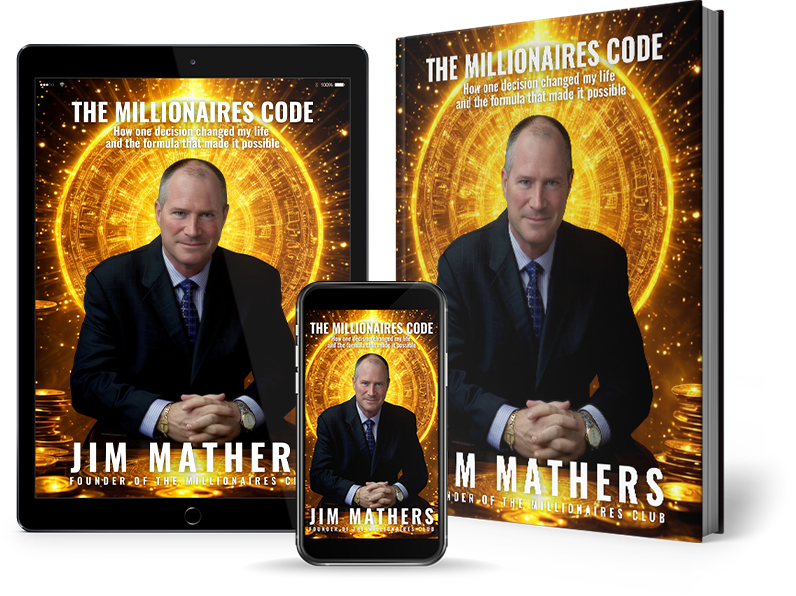
Download my free book, Cracking the Millionaire’s Code, where I share how I climbed out of rock bottom and built a life of financial freedom—one where I could finally pursue my purpose and achieve my goals.
Inside, you’ll learn the first step I took that changed everything, and a simple yet powerful formula I developed to help you take that first step.