

Knowing how to respond to difficult situations is one of the most valuable skills you can develop in life.
Have you ever had a day that was going perfectly normal when suddenly something happened that changed everything?
Maybe it was a phone call.
An email.
A conversation.
A piece of news you weren’t expecting.
Sometimes those surprises are wonderful.
A new opportunity appears.
You meet someone special.
A door opens where there wasn’t one before.
But sometimes life catches us off guard in less pleasant ways.
You lose a job.
A relationship ends.
A friend lets you down.
You receive difficult news.
Someone you care about gets sick.
A problem appears that you never saw coming.
The truth is, life has a way of doing that.
No matter how carefully we plan.
No matter how organized we are.
No matter how much experience we have.
Life will occasionally surprise us.
And if I’ve learned anything over the years, it’s this:
You can’t always control what happens.
Sometimes you can.
Most of the time, you can’t.
But there is something you can control.
You can control how you respond.
You can control how you react.
And you can control what you do next.
How to Respond to Difficult Situations Without Reacting Emotionally
When something unexpected happens, many of us feel an immediate need to respond.
We feel like we need to make a decision the moment something happens.
We react.
We say things we later wish we hadn’t said.
We rush to solve a problem, only to realize later that there was a better way to handle it.
We feel like we have to do something immediately, when often a little patience would have given us more clarity—or even allowed the situation to work itself out.
Over the years, I’ve learned that not every situation demands an instant response.
Sometimes the smartest move is to pause before making the next one.
In fact, learning how to respond to difficult situations rather than simply reacting to them can dramatically improve the quality of your decisions and your results.
There is a big difference between responding vs reacting.
Reactions are often emotional.
Responses are intentional.
Reactions are immediate.
Responses are thoughtful.
The ability to create a little space between an event and your response can change everything.
Now, that doesn’t mean ignoring reality.
It doesn’t mean avoiding difficult decisions.
And it certainly doesn’t mean pretending a problem doesn’t exist.
It simply means creating a little space between what happened and what you decide to do about it.
The Power of Perspective
There is a famous Salvador Dalí painting that looks like nothing more than a collection of shapes and colors when you’re standing close to it.
But when you step back, an entirely different image appears.
Life can be like that.
When we’re too close to a problem, it’s often difficult to see clearly.
Emotions are high.
Information is limited.
Perspective is hard to find.
But when we pause, take a breath, and step back, the bigger picture often begins to reveal itself.
New information appears.
Emotions settle.
Opportunities emerge.
Solutions reveal themselves.
And what once felt overwhelming becomes much easier to understand.
Sometimes the distance between the event and your response is where clarity is found.
Controlling Your Response
One of the greatest advantages you have during a challenge is controlling your response, even when you can’t control the circumstances.
That’s where your power lives.
Not in changing the past.
Not in wishing things had happened differently.
Not in trying to control things outside your influence.
But in deciding what you will do next.
I’ve found that many difficult situations become easier to navigate once we stop asking, “Why did this happen?” and start asking, “What should I do now?”
The first question keeps us focused on the problem.
The second moves us toward a solution.
How to Handle Setbacks With Confidence
Over the years, I’ve found that one of the best ways to handle setbacks is to avoid making important decisions when emotions are running high.
A setback can feel permanent when it’s fresh.
Growth often comes with challenges, and as I discussed in The Price of Growth, every meaningful achievement asks something of us.
But often it isn’t.
A disappointment today can become an opportunity tomorrow.
A closed door can redirect you toward a better one.
A difficult chapter can become the story that helps someone else years later.
That’s why patience matters.
Not because patience changes the situation.
But because patience often changes how we see it.
Personal Responsibility Creates Freedom
One lesson that has served me well throughout life is the importance of personal responsibility.
Not because we’re responsible for everything that happens.
We’re not.
Life will always throw unexpected challenges our way.
But we are responsible for how we respond.
We are responsible for the choices we make afterward.
We are responsible for the attitude we bring into the situation.
And that realization is empowering.
Because it means that no matter what life places in front of you, there is always something you can control.
There is always a next step available to you.
What Happens Next Is Up To You
Life will continue to surprise you.
Some surprises will become opportunities.
Others will become lessons.
Some will become stories you’ll tell years from now.
And some may become turning points that shape the direction of your life.
You may not control when those moments arrive.
You may not control the circumstances.
You may not control what happened.
But you always have influence over what happens next.
You get to choose your response.
You get to choose your attitude.
You get to choose your next step.
And more often than not, that next step determines far more about your future than the event itself.
So the next time life catches you off guard, remember:
Take a breath.
Take a step back.
Gather the facts.
Trust yourself.
Then decide.
Because while life may write the opening sentence of the next chapter, how you respond to difficult situations often determines how the rest of that chapter unfolds.
Love,
Take your first step toward a life that actually feels yours.
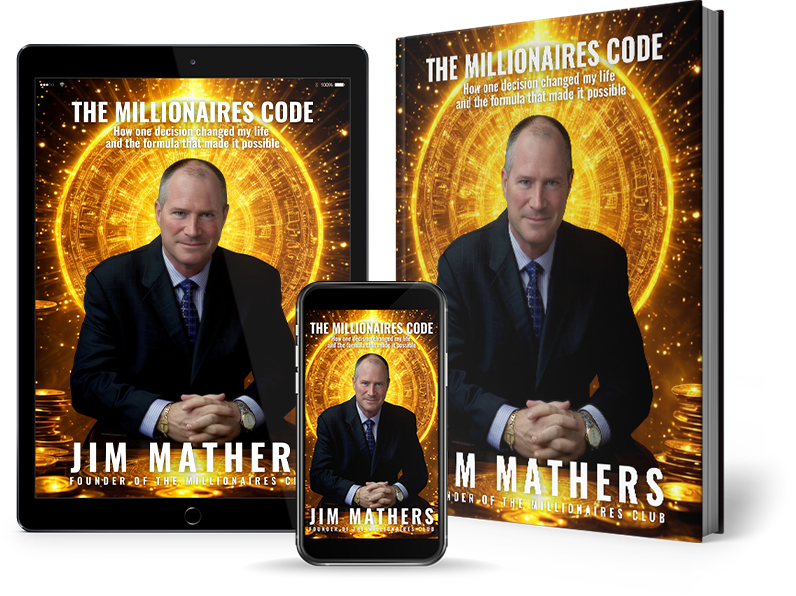
Download my free book, Cracking the Millionaire’s Code, where I share how I climbed out of rock bottom and built a life of financial freedom—one where I could finally pursue my purpose and achieve my goals.
Inside, you’ll learn the first step I took that changed everything, and a simple yet powerful formula I developed to help you take that first step.