

One powerful change you can make in 2026 to have more money
Here we are at the starting line of a brand-new year.
A full twelve months ahead of us to decide where we’re going, what we want to do, set new goals, dust off and renew old goals, and most importantly, figure out how we’re going to achieve them.
A new year is a kind of fresh start, and it has a funny way of making us reflective.
We celebrate the old and let in the new, and in doing so, we pause, we look ahead, and almost instinctively, many of us start thinking about money.
We want more stability, more freedom, and less stress. And while money for its own sake is never the end goal, money is a powerful tool. It gives us options, creates flexibility, and helps us focus on what truly matters to us.
It’s no wonder that many of us list financial goals on our New Year’s lists.
So… as we step into 2026, it feels like the perfect time to discuss something simple, practical, and powerful.
Something I personally wish I had learned way sooner.
Something that quietly shapes whether we struggle financially or build real wealth over time.
It’s a small shift in how we use our money, but it changes everything.
The Shift
We live in a world designed to turn us into consumers.
We’re constantly marketed to. New cars. Bigger houses. Watches. Jewelry. Handbags. Brands. Labels. The next upgrade. Everywhere you look, you will find an advertisement wanting you to buy.
And there’s nothing wrong with wanting nice things. But here’s the uncomfortable truth that many don’t realize early enough:
You don’t build financial freedom by buying what you want. You build wealth by changing how you think about money.
You build wealth by shifting your mindset from a consumer mindset to an investor mindset.
And there are several important parts to this.
First, we have to stop chasing material wants and start asking ourselves: “How can I make my money work for me?”
Second, we must set long-term goals. Big ones. Goals we genuinely care about. Because when we do, every time we catch ourselves longing for something new that we want but don’t truly need, it becomes easier to choose our long-term vision over short-term, material gratification.
Third, we must realize that we all have to start somewhere, and we have to start right now. This isn’t about how much money we have. There is no amount that’s “too small.” It’s a matter of building a habit of investing your money so it grows.
And the key is this:
Small, consistent actions over time quietly add up to something big because every bit you put away slowly compounds.
A little invested regularly doesn’t stay little. It grows. It stacks. And over time, it multiplies. Time does the heavy lifting. All you have to do is be consistent.
A Small Personal Example
Let me give you a personal example to illustrate how this works.
About 15 years ago, I received a large bonus and decided to buy myself a new watch. I already had a watch, but I wanted a new one, and I figured I’d buy it as a reward.
So the money was spent.
Today, I still have that watch, and it still works. It tells the time. The date. And it looks good.
But had I put that same amount of money into an investment instead, say a few gold coins or even a simple stock market investment, today it would be worth roughly six times the original amount.
Enough to buy that same watch now and still have tens of thousands left over.
So what did I learn from this?
I learned the key to building wealth.
The Key to Having More Money
The key isn’t deprivation. It’s not denying ourselves or “not rewarding ourselves” when we deserve it. It’s simply delaying our gratification. It’s choosing something bigger or better in the future over something exciting today.
Every time we delay a purchase that we want but don’t need and redirect that money toward a long-term goal, we’re making a quiet decision in favor of our future selves.
Financial freedom doesn’t come from buying more things. It comes from being intentional with our money.
Buying what we need.
Investing in what we want long-term.
What Counts as an Investment?
Here is another thing to consider.
When I talk about making an investment, it doesn’t only mean stocks.
Yes, it can be stocks, gold, or hard assets, but it can also be a business idea, a partnership, investing in an existing business to grow it, learning a new skill, or investing in education to increase earning power. Generally, anything that moves us closer to our goals is an investment.
The goal is simple:
Put money to work so it helps us earn more, grow more, or become more capable over time.
I am not providing investment advice.
How and where you invest are personal decisions.
However, if someone chooses to invest, they should learn about it first.
They should understand exactly where they are putting their money.
They should never take on debt to invest; instead, they should set aside a comfortable, steady amount from each paycheck or once a month. The key is not “how much”; it’s consistency.
Anyone who invests should avoid chasing quick, massive returns (such investments are risky).
When investing, I have learned that long-term thinking wins, consistency beats excitement, and smart beats fast. And like anything we do, there is a set of rules that must be learned and practiced in order to succeed.
So What’s the One Thing We Can Do in 2026?
Delay instant gratification.
Put off immediate materialistic wants.
Shift money and energy away from short-term wants and toward long-term goals.
Ask yourself:
“Where do I want to be financially in 5–10 years?”
“What will get me there?”
“What small steps can I take consistently starting now?”
Even small daily or weekly investments add up in a big way over time.
If you’re serious about making 2026 different, mindset matters just as much as money.
And if we want help making goals actually stick, there’s a free course I designed exactly for that.
How to Make Your Resolutions Stick for Real breaks down 11 practical lessons to help turn intentions into habits and habits into results. If you haven’t already signed up for it, you can do so by clicking the button below.
You will need to sign up for a free account on my website (if you don’t already have one), and the course will be in your Student Dashboard.
This course and the lessons I teach are not just for 2026, but for any goals we set going forward.
Because goals don’t fail from lack of desire.
They fail due to a lack of structure.
And structure changes everything.
So… here’s to smarter decisions.
Longer-term thinking.
And a future that benefits from the choices we make today.
Love,
Take your first step toward a life that actually feels yours.
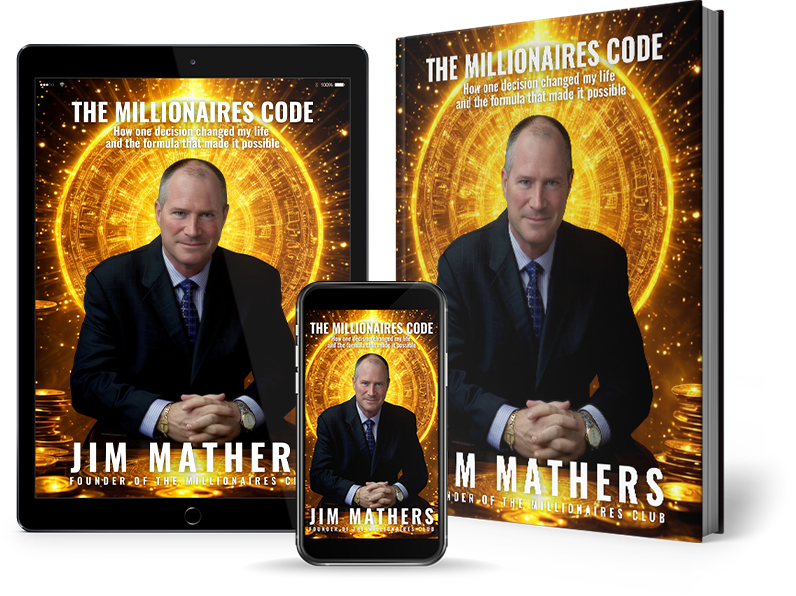
Download my free book, Cracking the Millionaire’s Code, where I share how I climbed out of rock bottom and built a life of financial freedom—one where I could finally pursue my purpose and achieve my goals.
Inside, you’ll learn the first step I took that changed everything, and a simple yet powerful formula I developed to help you take that first step.